
Roof Leak, Ceiling, Wall & Hidden Water Damage Cleanup in Leander, TX
Roof leak, ceiling, wall, and hidden water damage cleanup in Leander, TX addresses concealed moisture that has migrated into ceiling cavities, wall cavities, drywall, insulation, and attic areas after a roof leak or other above-ceiling water source. Because water travels along joists and inside wall cavities before appearing as a stain, the visible damage often does not represent the full affected area. Leander Water Damage Restoration focuses on moisture evaluation, water removal where present, and structural drying of concealed materials. This service does not repair roofs; it addresses the resulting interior water damage after or while the roof leak source is being properly addressed. For homes and businesses in Leander and the surrounding North Austin area, prompt cleanup helps address hidden moisture before it causes secondary deterioration. If you have ceiling, wall, or hidden water damage, call 737-379-0924 to discuss evaluation and drying.
What Ceiling, Wall & Hidden Water Damage Cleanup Includes in Leander
Roof leak, ceiling, wall, and hidden water damage cleanup is the restoration work that addresses concealed moisture in ceiling cavities, wall cavities, drywall, insulation, and attic areas after a roof leak or other above-ceiling water source. It is important to clarify the scope: this service addresses the resulting interior water damage — moisture in ceilings, walls, and concealed cavities — rather than repairing the roof itself. After the roof leak source has been corrected or while it is being addressed, restoration focuses on moisture evaluation, water removal where standing water is present, and structural drying of affected materials. Concealed moisture is the central concern of this work. Water that enters through a roof leak travels along ceiling joists, runs down into wall cavities, and saturates drywall and insulation in areas far from the visible ceiling stain. Ceiling cavities collect water above the drywall, where it saturates insulation and framing. Wall cavities collect water that has run down from above, holding moisture against drywall, insulation, and studs. Attic insulation absorbs roof leak water and holds it against ceiling framing. Drywall wicks moisture upward and across, softening and staining. Because water travels along structural members and inside cavities, the visible stain or drip often does not represent the full affected area — moisture can be present in wall cavities and ceiling assemblies where it is not visible at all. Ceiling water damage and wet drywall cleanup, wall water damage and hidden moisture cleanup, and attic water damage and wet insulation drying are all common parts of this work. This page does not claim that destructive demolition is always required — moisture evaluation determines which materials can be dried in place and which require access or removal to dry properly.
Common Causes of Ceiling, Wall & Hidden Water Damage in Leander
Ceiling, wall, and hidden water damage in Leander properties comes from several sources. Roof leaks during heavy Central Texas rainfall allow water through compromised roofing, around flashing, and through skylights, sending water into ceiling assemblies and attic insulation where it travels along joists. Plumbing above the ceiling — pipe leaks, fitting failures, and supply line breaks in attics or between floors — sends water into ceiling drywall and wall cavities. Bathroom leaks from second-story plumbing send water through the floor assembly into the ceiling and walls of the room below. HVAC condensate drain line clogs and overflow pan failures introduce slow, hidden moisture into ceilings and walls over extended periods. Appliance lines in attics or between floors, including water heater supply lines and refrigerator lines, can fail and release water into concealed spaces. Exterior water intrusion through siding, stucco, or veneer sends water into wall assemblies. Slow concealed leaks — from small pipe weeps, condensation, or minor roof entry points — can introduce moisture over weeks or months before discovery. Warning signs of ceiling, wall, or hidden water damage include water stains on ceilings, bubbling or peeling paint, soft or crumbling drywall, swollen trim and baseboards, damp odors, recurring discoloration that returns after drying, peeling finish, and dripping from ceilings. Because water travels along joists and inside wall cavities, the visible stain often does not represent the full affected area — moisture can be present in concealed cavities where it is not visible at all. This page does not claim the company repairs roofs — restoration addresses the resulting interior water damage after or while the roof leak source is being properly addressed. If ceiling materials appear soft, sagging, or structurally unstable, do not enter the area.
How Ceiling, Wall & Hidden Water Damage Cleanup Works in Leander
After the roof leak or above-ceiling source has been corrected or while it is being addressed, cleanup follows a structured sequence focused on moisture evaluation and drying. Procedures vary based on the source and extent, but a typical approach includes:
- 1
Moisture Evaluation
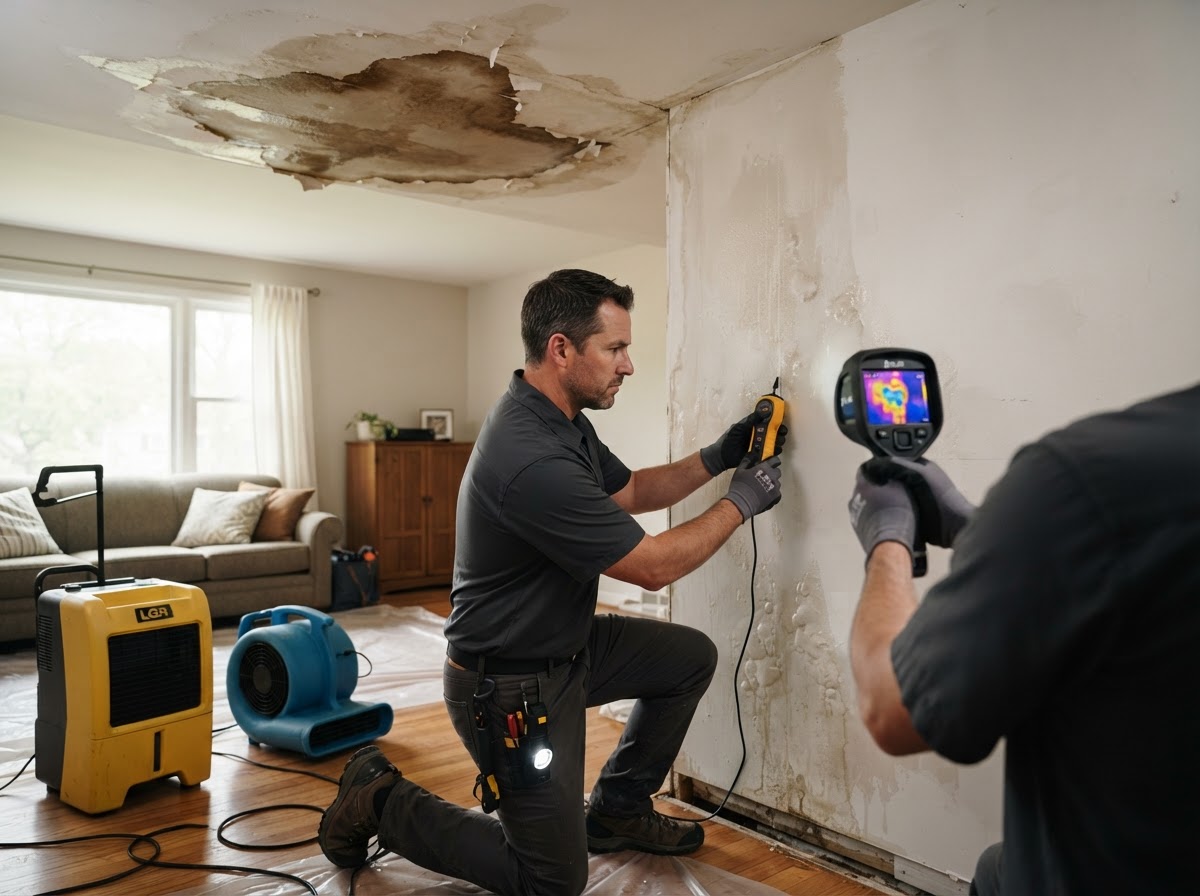
Moisture meters and thermal imaging map how far water has migrated into ceiling drywall, wall cavities, attic insulation, and framing. Because water travels along joists and inside cavities, mapping reveals moisture far beyond the visible stain. This establishes the full affected area.
- 2
Address Safety Concerns
Ceiling materials that are soft, sagging, or heavy with water may indicate structural concern and are avoided. Electrical hazards in ceiling fixtures and wall outlets are identified. The area is confirmed safe before work begins.
- 3
Remove Standing Water Where Present
Where standing water has collected — in ceiling cavities, on flooring below, or in accessible areas — it is removed with extraction equipment. Many ceiling and wall leaks produce hidden moisture rather than large standing water, so removal is scaled to what is present.
- 4
Inspect Ceiling & Wall Moisture
The moisture map guides inspection of ceiling joists, wall cavities, and attic insulation. Access may be created to allow airflow into concealed cavities. This page does not claim destructive demolition is always required — access decisions are based on where moisture is and whether materials can dry in place.
- 5
Dry & Dehumidify Materials
Air movers and dehumidifiers evaporate and capture moisture from ceiling drywall, wall assemblies, insulation, and framing. Equipment is positioned to reach concealed cavities, and placement is adjusted based on ongoing readings. Wet insulation in enclosed cavities may be evaluated for removal to allow airflow.
- 6
Review Moisture & Cleanup
Final moisture readings confirm materials have reached drying goals, including inside ceiling and wall cavities. Equipment is removed and the area is cleaned. The timeline depends on saturation, materials, and how long moisture was present before discovery.
Because water travels along joists and inside wall cavities, the visible stain does not represent the full affected area. Moisture detection maps concealed moisture before drying is considered complete. This page does not claim destructive demolition is always required — access and removal decisions are based on where moisture is and whether materials can dry in place.
Why Professional Ceiling, Wall & Hidden Water Cleanup Matters for Leander Properties
Professional ceiling, wall, and hidden water damage cleanup matters because concealed moisture — inside ceiling cavities, wall cavities, and attic insulation — is the defining feature of this kind of damage, and it cannot be addressed by surface drying. Water that enters through a roof leak or above-ceiling source travels along joists, runs down into wall cavities, and saturates insulation and drywall in areas far from the visible stain. Without thorough moisture detection, this hidden moisture goes unaddressed and continues causing deterioration, odors, and microbial growth in drywall, insulation, and framing. Without professional evaluation, materials that should be accessed or removed may be left in place, or demolition may be performed where drying in place would have been sufficient. Professional cleanup brings moisture meters, thermal imaging, air movers, and dehumidification together in a process that maps concealed moisture and dries affected materials to target levels. For Leander properties near US-183, the 183A Toll Road, Crystal Falls Parkway, and Ronald Reagan Boulevard, cleanup focuses on identifying the full affected area — including inside ceiling and wall cavities — and verifying that concealed materials are actually dry. Serving Leander and surrounding Williamson County and North Austin communities, the process addresses hidden moisture after the roof leak or above-ceiling source is addressed. Depending on the source, these related services may also be relevant:
Related Water Damage Services
- Structural Drying & Dehumidification
- Storm & Flash Flood Water Damage Restoration
- Burst Pipe & Plumbing Leak Cleanup
- AC/HVAC Condensate Drain Line & Appliance Leak Cleanup
- Ceiling Water Damage & Wet Drywall Cleanup
- Wall Water Damage & Hidden Moisture Cleanup
- Attic Water Damage & Wet Insulation Drying
- Water Damage Restoration Home
Ceiling, Wall & Hidden Water Damage FAQs for Leander, TX
Need Ceiling, Wall & Hidden Water Damage Cleanup in Leander?
If a roof leak, above-ceiling plumbing leak, or concealed moisture is causing ceiling stains, wall damage, or hidden water damage in your Leander property, call to discuss moisture evaluation, structural drying, and interior cleanup.