
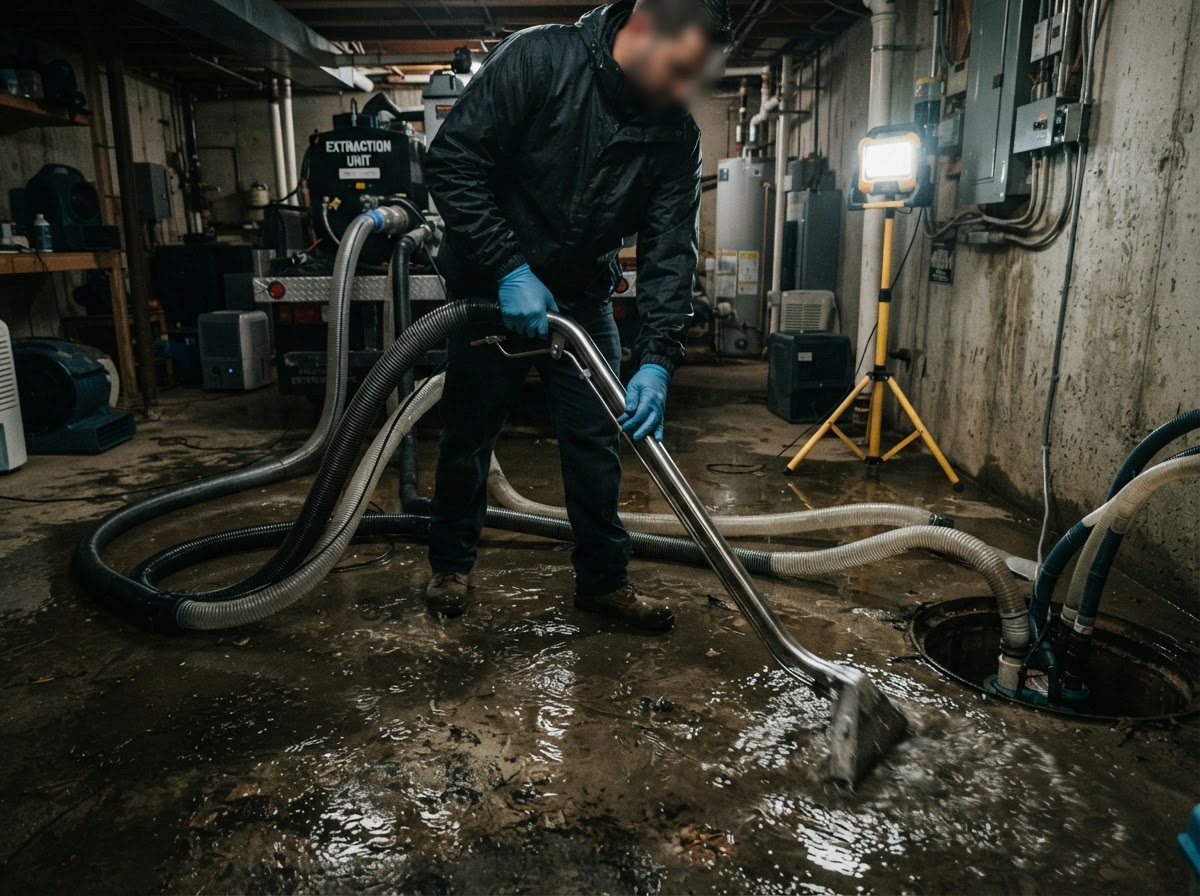
Sump Pump Failure & Water Cleanup in Leander, TX
Sump pump failure water cleanup in Leander, TX addresses the standing water that can accumulate in low-level areas, utility spaces, and below-grade rooms when a pump stops removing water as intended. When a sump pump fails, loses power, or cannot keep up with incoming water, pooling water can spread across flooring, wick into baseboards and drywall, and saturate stored materials and framing before the problem is noticed. Leander Water Damage Restoration focuses on extracting that standing water, evaluating how far moisture has migrated, and drying affected building materials. Because water that collects in a low area often travels farther than the visible pool suggests, moisture detection is a central part of the process. If a sump pump problem has left water in your Leander property, call 737-379-0924 to discuss extraction and drying.
What Happens When a Sump Pump Fails in a Leander Property?
A sump pump is designed to collect and discharge water that gathers in a low area, and when it stops working, that water has nowhere to go. The result is standing water that can rise across flooring, reach baseboards and lower drywall, seep into wall cavities, and saturate any porous materials stored in the area. In some Leander properties, low-level utility spaces, crawlspaces, or below-grade rooms rely on a pump to manage drainage, and a failure there can allow water to accumulate quickly. The cleanup that follows is not only about removing the visible pool. Water that sits on a floor migrates outward through capillary action, traveling beneath flooring, into subflooring, and up into drywall and framing. The longer water remains, the more material it affects and the higher the risk of secondary deterioration, odors, and microbial growth concerns. Professional water extraction removes the pooled water first, followed by moisture evaluation to locate water that has moved beyond the visible area, and then structural drying to stabilize affected materials. After the pump or drainage source has been addressed by the appropriate party, restoration can focus on returning the space to a dry condition.
Common Causes of Sump Pump Water Accumulation in Leander
Water may accumulate after a sump pump failure for several reasons, and understanding the likely source helps guide the cleanup approach. A pump can fail mechanically, lose power during a storm or outage, become overwhelmed by a volume of water that exceeds its capacity, or discharge water improperly because of a clogged or frozen discharge line. In each case, the restoration focus remains on the resulting water damage rather than diagnosing or repairing the pump itself. Affected materials commonly include concrete or finished flooring, baseboards, lower drywall sections, wall framing, insulation in adjacent cavities, and any stored contents that absorbed water. Warning signs that water has spread beyond the visible pool include damp or discolored drywall above the waterline, swollen baseboards, a persistent damp odor, soft or warped flooring, and moisture readings that climb when a meter is moved away from the pooled area. These signs can indicate concealed moisture and should be investigated with professional detection tools. Because water in a low area often follows the path of least resistance, it can travel beneath walls into adjacent rooms before the full extent of saturation is obvious.
Water Extraction and Drying After a Sump Pump Problem
After the pump or drainage source has been addressed, sump pump failure water cleanup follows a structured sequence designed to remove water and stabilize affected materials. The specific steps vary with the volume of water, the materials involved, and how far moisture has migrated.
- 1
Evaluate the Water Source and Affected Areas
The affected area is assessed to determine the water source status, the extent of visible standing water, and which materials and rooms have been impacted. This evaluation guides the extraction and drying plan.
- 2
Address Immediate Safety Concerns
Standing water near electrical equipment, panels, or outlets presents a hazard. The area is evaluated for electrical and structural safety before extraction begins, and unsafe areas are avoided until safe.
- 3
Extract Standing Water
Commercial extraction equipment removes pooled water from flooring and low areas. The goal is to pull as much free water as possible before drying begins, because air movers and dehumidifiers work on moisture retained in materials rather than standing pools.
- 4
Locate Moisture Migration
Moisture meters and detection tools map how far water has traveled beneath flooring, into drywall, and behind walls. This step identifies concealed moisture that would otherwise remain after the visible water is gone.
- 5
Dry and Dehumidify Affected Materials
Air movers create evaporation across wet surfaces while dehumidifiers pull moisture from the air. Equipment placement targets the areas where moisture was detected, including wall cavities and subflooring where access allows.
- 6
Review Moisture Levels and Complete Cleanup
Moisture readings are monitored over time until affected materials reach an appropriate drying goal. Affected contents and surfaces are addressed as part of final cleanup once drying is complete.
Drying time varies based on saturation, building materials, water migration, airflow, temperature, and humidity, so no universal timeframe applies. The process continues until moisture readings confirm that affected materials have stabilized.
Why Professional Sump Pump Water Cleanup Matters in Leander
Removing the visible water after a sump pump failure is only the first step, because moisture retained in flooring, drywall, and framing continues to affect the property long after the pool is gone. Professional water extraction and structural drying address that retained moisture, helping limit how far water migrates and reducing the risk of secondary deterioration. In Leander and the surrounding Williamson County area, properties that rely on sump pumps for low-level drainage can benefit from a thorough moisture evaluation that looks beyond the obvious waterline. Related restoration services may be relevant depending on how the water entered and spread. If the water relates to storm runoff or broader flooding, flood damage cleanup applies. For large volumes of standing water, emergency water removal and extraction focuses on rapid removal. Structural drying and dehumidification addresses moisture retained in building materials, and the broader water damage restoration service covers the complete process. Each situation is different, so the appropriate combination of services depends on the source, volume, and extent of migration.
Sump Pump Failure Water Cleanup FAQs for Leander, TX
Need Sump Pump Water Cleanup in Leander?
If a sump pump failure has left standing water in your Leander property, call to discuss water extraction, moisture evaluation, and structural drying of affected flooring, drywall, and building materials.