
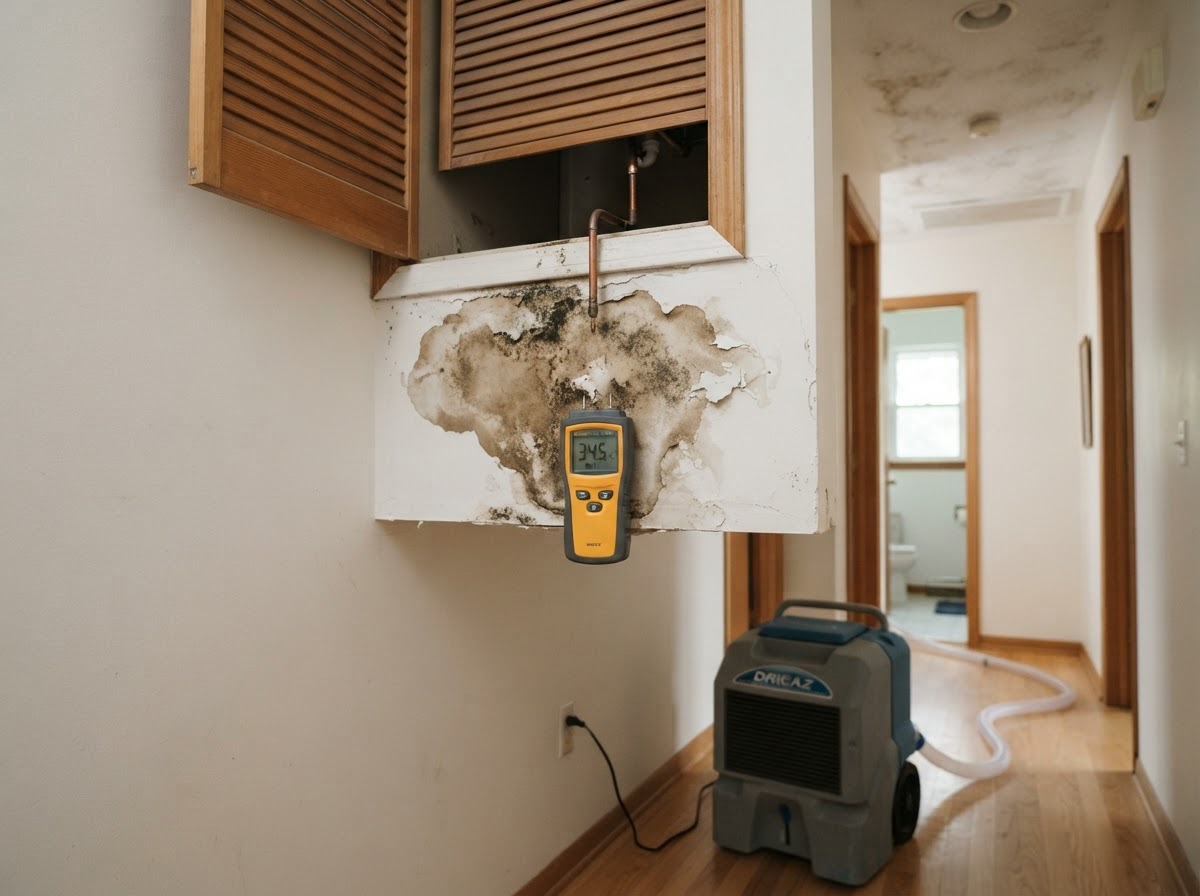
AC Drain Line Overflow Water Damage Cleanup in Leander, TX
AC drain line overflow water damage cleanup in Leander, TX addresses the water damage that results when an air conditioner's condensate drain line clogs, backs up, or overflows, sending water into the HVAC closet, across nearby ceilings, down walls, and into flooring. Air conditioning systems produce condensate moisture that drains through a dedicated line, and when that line is blocked, water overflows the drain pan and reaches surrounding building materials. Leander Water Damage Restoration does not repair HVAC equipment or clean drain lines. Once the HVAC or drain-line source has been corrected by the appropriate party, restoration focuses on evaluating water spread, extracting accessible water, and drying affected ceilings, walls, and flooring. Because condensate overflow often travels behind walls and above ceilings before it is visible, moisture detection is central to the process. If an AC drain line overflow has caused water damage in your Leander property, call 737-379-0924 to discuss cleanup and drying.
What Happens When an AC Drain Line Overflows?
An air conditioning system removes humidity from the air as it cools, and that moisture collects as condensate that drains through a dedicated line to the outside. When the condensate drain line becomes clogged with debris, algae, or buildup, water backs up into the drain pan and eventually overflows. The overflowing water does not stay in the pan. It spills into the HVAC closet or the area surrounding the air handler, runs down nearby walls, saturates ceiling drywall when the unit is in an attic, and reaches flooring beneath the affected area. Because the overflow often begins slowly and the drain pan is hidden inside the unit or attic, water can travel behind walls and above ceilings for some time before a stain or drip becomes visible. This is why AC drain line overflow water damage cleanup focuses on moisture evaluation as much as on water removal. After the HVAC or drain-line source has been corrected, professional restoration evaluates how far water has spread, extracts accessible water, and dries affected ceilings, walls, insulation, and flooring. Leander Water Damage Restoration does not repair HVAC equipment, clean drain lines, or diagnose mechanical causes. The restoration focus is on the resulting water damage.
Warning Signs of AC Condensate Water Damage in Leander
Several signs can indicate that an AC drain line has overflowed and caused concealed water damage. Water appearing near the indoor air handler or HVAC closet, ceiling staining or softness below an attic unit, damp drywall on walls adjacent to the HVAC system, water in the overflow pan, recurring dampness that returns after drying, and a musty odor near the unit can all suggest that condensate water is reaching building materials. Because the drain pan and line are often hidden, the first visible sign may be a ceiling stain or wall discoloration rather than standing water. Affected materials commonly include ceiling drywall below an attic air handler, wall drywall adjacent to the HVAC closet, insulation in the ceiling or wall cavity, flooring beneath the affected area, and baseboards along the lower wall. When the unit is in an attic, wet insulation and ceiling drywall are frequently the primary concerns. These signs can indicate concealed moisture and should be investigated with professional detection tools. The HVAC or drain-line source should be corrected by the appropriate party before or alongside restoration work. Leander Water Damage Restoration does not diagnose the mechanical cause of the overflow.
Water Cleanup and Drying After an AC Drain Line Overflow
After the HVAC or drain-line source has been corrected, AC drain line overflow cleanup follows a structured sequence focused on locating and drying moisture hidden in ceilings, walls, and flooring. The specific steps vary with the unit location, materials, and extent of migration.
- 1
Evaluate Water Spread
The area around the air handler, the ceiling below an attic unit, adjacent walls, and flooring are assessed to identify where condensate water has reached building materials. This evaluation establishes the scope of water damage.
- 2
Address Safety Concerns
Water near the HVAC system's electrical components, nearby outlets, or a ceiling fixture is evaluated for safety. The area is approached carefully, and unsafe conditions are avoided until safe.
- 3
Address Accessible Water
Where standing water is present in the overflow pan, HVAC closet, or floor area, extraction equipment removes it before drying begins. Accessible water on flooring and horizontal surfaces is addressed first.
- 4
Check Concealed Moisture
Moisture meters check ceiling drywall below an attic unit, wall drywall adjacent to the HVAC closet, insulation in the ceiling or wall cavity, and the subfloor beneath affected flooring. This step locates water that traveled beyond the visible area.
- 5
Dry Drywall, Ceiling, and Flooring
Air movers and dehumidifiers target the areas where moisture was detected. Equipment placement may focus on ceiling drywall, wall cavities, and flooring where concealed condensate water collected.
- 6
Dehumidify and Monitor
Dehumidification continues until moisture readings confirm that affected materials, including insulation and drywall, have reached an appropriate drying goal. Monitoring confirms that concealed moisture is being reduced.
Drying time depends on the materials involved, saturation, airflow, humidity, and how far condensate water migrated into ceilings and walls, so no fixed timeframe applies.
Why Professional AC Drain Line Cleanup Matters in Leander
AC drain line overflow is deceptive because the source is hidden inside the HVAC system or attic, and the water often travels behind walls and above ceilings before it becomes visible. Professional moisture evaluation reaches the ceiling drywall, wall cavities, and insulation that a homeowner cannot easily inspect, so drying equipment targets the actual affected area rather than only the visible stain. In Leander and the surrounding Central Texas area, where air conditioning runs frequently and produces substantial condensate, properties benefit from a thorough approach because moisture left in ceiling and wall cavities continues to affect materials long after the visible stain appears. Related restoration services may apply depending on how the water spread. The broader AC/HVAC condensate and appliance leak cleanup service covers the full range of HVAC-related water damage. Ceiling water damage and wet drywall cleanup addresses ceiling materials specifically. Wall water damage and hidden moisture cleanup focuses on concealed moisture inside wall cavities. Structural drying and dehumidification handles moisture retained in building materials.
AC Drain Line Overflow Water Damage FAQs for Leander, TX
Need AC Drain Line Overflow Cleanup in Leander?
If an AC drain line overflow has caused water damage in your Leander property, call to discuss moisture evaluation, ceiling and wall cleanup, and structural drying of affected materials.