
Storm & Flash Flood Water Damage Restoration in Leander, TX
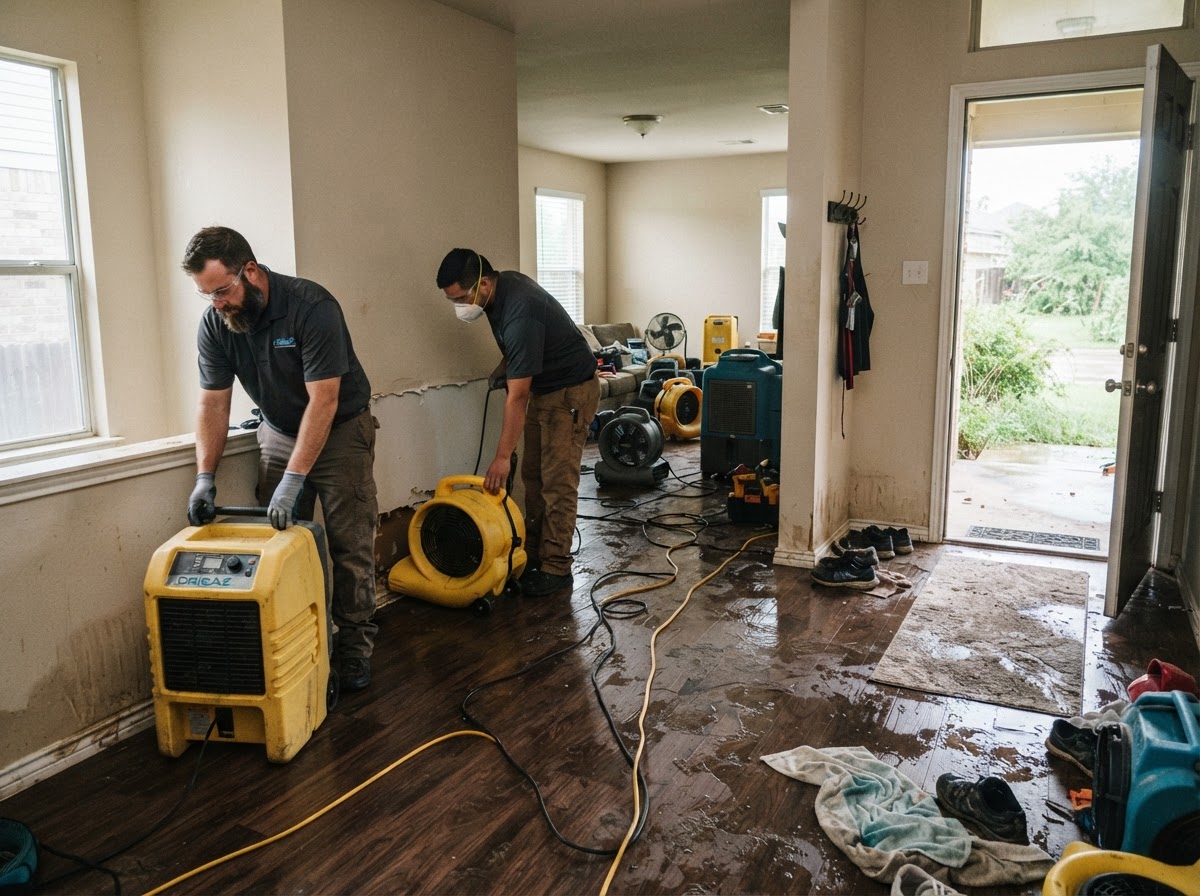
Storm and flash flood water damage restoration in Leander, TX addresses water that enters a property during heavy rainfall, severe thunderstorms, and flash-flood conditions common to Central Texas. Stormwater can enter through roof leaks, door thresholds, window openings, and exterior penetration, affecting ceilings, walls, and broad floor areas. Leander Water Damage Restoration focuses on safety evaluation, water extraction, moisture assessment, structural drying, and cleanup after storm intrusion. Because stormwater can carry contamination from exterior sources, the water category affects cleanup decisions. This service does not imply that exterior construction repairs — roofing, window, or door repairs — are automatically provided; restoration addresses the resulting interior water damage after or while the exterior source is being addressed. For homes and businesses in Leander and the surrounding North Austin area, prompt storm cleanup helps limit how far moisture migrates. If stormwater has entered your property, call 737-379-0924 to discuss cleanup and drying.
What Storm Water Damage Restoration Includes in Leander
Storm and flash flood water damage restoration is the process of addressing water that has entered a property during severe weather, and it differs from plumbing-related cleanup in several ways. Stormwater enters through exterior sources — roof leaks during heavy rainfall, wind-driven rain around door thresholds, water through window openings, drainage intrusion at ground level, and exterior wall penetration. Flash-flood conditions during intense Central Texas rainfall can affect ground-level spaces and introduce exterior water that may carry soil, debris, and biological contamination. Because stormwater comes from exterior sources, it can carry contamination that clean indoor plumbing water does not, and the water category affects how affected materials are handled — contaminated porous materials may need to be removed rather than dried. Storm damage often affects broader areas than a single plumbing leak, because water enters through multiple points and spreads across ceilings, walls, and floor areas. Restoration includes a safety evaluation to identify electrical, structural, and contamination hazards; water extraction to remove standing water; moisture assessment to map how far water has migrated into ceilings, walls, and beneath flooring; structural drying with air movers and dehumidifiers; and cleanup of the affected area. This service does not imply that exterior construction repairs — roofing, window, door, or drainage repairs — are automatically provided. Those repairs are handled separately; restoration addresses the resulting interior water damage after or while the exterior source is being addressed. Because stormwater can spread across large areas and into concealed spaces, the visible water does not reveal the full extent of the damage, and the water category must be assessed to determine the correct material handling.
How Stormwater Enters Leander Properties
Stormwater enters Leander properties through several paths during severe weather. Roof leaks during heavy rainfall allow water through compromised roofing, around flashing, and through skylights, sending water into ceiling assemblies and attic insulation where it travels along joists before appearing as ceiling stains. Door thresholds, especially during wind-driven rain, allow water past weatherstripping and into entryways, where it spreads across flooring. Window openings leak water through failed seals, cracked caulking, or around frames, sending water into wall cavities beneath windows. Drainage intrusion at ground level — from grading that directs water toward the foundation, clogged gutters, or overwhelmed drainage — allows water to enter at the slab or through weep holes. Exterior water penetration through siding, stucco, or veneer sends water into wall assemblies. Flash-flood conditions during intense rainfall can affect ground-level spaces, crawl spaces, and lower levels, introducing exterior water that may carry contamination. Ceiling intrusion from roof leaks sends water through ceiling drywall, where it can saturate insulation and travel across ceiling joists into areas far from the original entry point. Because stormwater enters through multiple points during a single event, the affected area can be broad and spread across ceilings, walls, and floors simultaneously. Warning signs of storm water damage include water stains on ceilings, dripping ceilings, wet carpet near entryways and windows, damp or stained walls, water at the slab or in lower levels, damp odors, and visible water during or after rainfall. This page does not imply that exterior construction repairs are automatically provided — roofing, window, door, and drainage repairs are handled separately. If stormwater is near electrical equipment, avoid the area, and do not enter potentially contaminated floodwater.
How Storm Water Damage Restoration Works in Leander
Storm restoration follows a structured sequence that accounts for the water source and category. Procedures vary based on the entry points and extent, but a typical approach includes:
- 1
Safety Evaluation
Electrical, structural, and contamination hazards are identified. The stormwater source and category — clean rainwater versus potentially contaminated exterior water — are assessed, as contamination affects material handling. If water is near electrical equipment, the area is avoided until safe.
- 2
Water Extraction
Commercial extraction equipment removes standing water from flooring, carpet, and accessible areas. Stormwater can affect broad floor areas, so extraction is scaled to the affected space. Contaminated water is handled with appropriate precautions.
- 3
Moisture Assessment
Moisture meters and thermal imaging map how far water has migrated into ceilings, walls, beneath flooring, and into wall cavities. Stormwater enters through multiple points, so mapping reveals the full affected area beyond visible water.
- 4
Structural Drying
Air movers and dehumidifiers evaporate and capture moisture from ceiling drywall, wall assemblies, flooring, and subflooring. Equipment is positioned based on the moisture map and monitored as materials dry. Ceiling and wall cavities may require targeted airflow.
- 5
Affected-Material Review
Porous materials are evaluated based on the water category. Clean rainwater-affected materials may be dried; contaminated stormwater may require removal of porous materials. The review determines what can be salvaged versus removed based on the water category and saturation.
- 6
Cleanup & Moisture Review
The work area is cleaned, removed materials are addressed, and final moisture readings confirm retained materials are dry. Exterior source repairs are handled separately. The timeline depends on the extent, materials, and water category.
Because stormwater enters through multiple points and can carry contamination, the water category determines whether porous materials are dried or removed. Restoration addresses the interior water damage after or while the exterior source is being addressed — exterior construction repairs are a separate scope.
Why Professional Storm Restoration Matters for Leander Properties
Professional storm and flash flood water damage restoration matters because stormwater spreads across broad areas, enters through multiple points, and — depending on the source — can carry contamination that affects which materials can be saved. Without thorough moisture mapping, water in ceiling assemblies, wall cavities, and beneath flooring goes undetected and continues causing deterioration. Without proper categorization, contaminated stormwater might be treated as if it were clean rainwater, creating material and health concerns. Professional restoration brings safety evaluation, commercial extraction, moisture meters, thermal imaging, and controlled drying together in a process tailored to the storm source and water category. Leander sits in the Central Texas region, where severe thunderstorms and heavy rainfall are part of the climate, and properties near US-183, the 183A Toll Road, Crystal Falls Parkway, and Ronald Reagan Boulevard can be affected by stormwater intrusion. Serving Leander and surrounding Williamson County and North Austin communities, the process addresses both the visible water and the hidden moisture that follows storm intrusion. Depending on how stormwater entered your property, these related services may also be relevant:
Storm & Flash Flood Restoration FAQs for Leander, TX
Need Storm Water Damage Restoration in Leander?
If stormwater, heavy rainfall, or flash-flood conditions have sent water into your Leander property, call to discuss water extraction, moisture assessment, structural drying, and cleanup.