Professional Water Damage Restoration in Leander, TX
Professional water damage restoration in Leander, TX is the structured process of returning a water-damaged property to a stable, dry condition after intrusion from plumbing failures, appliance leaks, stormwater, sewage, or roof leaks. Leander Water Damage Restoration focuses on the full scope of restoration — source control guidance, standing water extraction, moisture assessment, structural drying, dehumidification, and cleanup — rather than simply removing visible water. Water migrates into drywall, beneath flooring, and behind walls in ways that are not immediately visible, so moisture detection is central to the process. For homes and businesses in Leander and the surrounding North Austin area, prompt restoration helps limit how far moisture spreads and how much building material is affected. If your property has water damage, call 737-379-0924 to discuss extraction and drying.
What Water Damage Restoration Includes in Leander
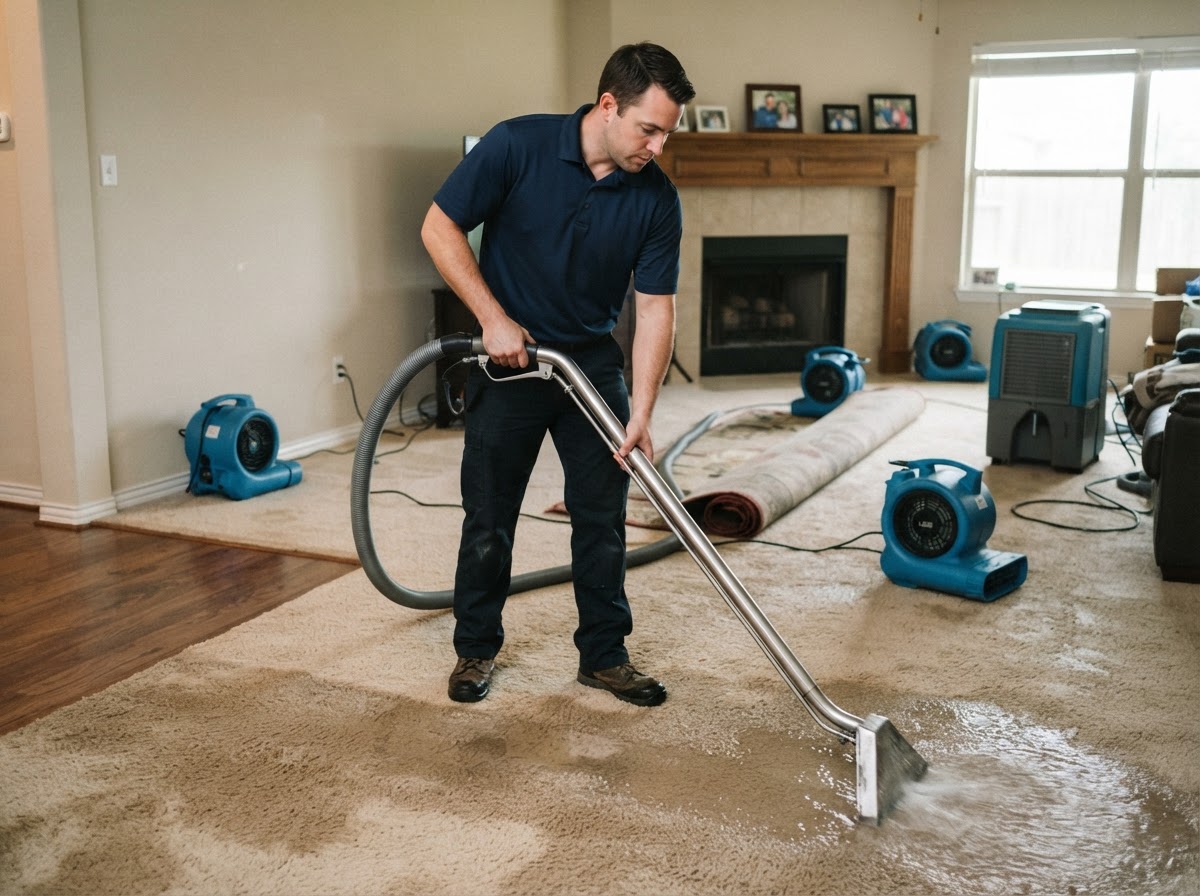
Water damage restoration is the complete process of addressing a property after water has intruded, and it goes well beyond removing visible water. The process generally includes source control guidance — identifying and, where safe, stopping the water source before restoration begins — followed by standing water extraction using commercial removal equipment. Once pooled water is removed, moisture assessment maps how far water has migrated into drywall, beneath flooring, into insulation, and behind cabinetry, because the visible water is often only part of the problem. Structural drying then uses air movers and dehumidification to evaporate and capture bound moisture from building materials. Dehumidification pulls the evaporated moisture from the air so it does not reabsorb into materials. Cleanup completes the process, addressing affected materials and the work area. Each stage depends on the one before it: extraction without drying leaves materials saturated, and drying without moisture assessment misses hidden water. Restoration is needed whenever water has contacted porous building materials — drywall, insulation, carpet padding, wood framing, subflooring, or cabinetry — because these materials absorb moisture and continue deteriorating until they are dried or removed. The water category — clean supply water, grey appliance water, or contaminated black water — also shapes the approach, as contaminated sources require different handling. Because water follows gravity and travels through cavities, prompt action limits how far it migrates and how much material is affected.
Common Causes of Water Damage in Leander Properties
Water damage in Leander properties comes from a range of sources, each affecting different materials and requiring a tailored restoration approach. Pipe leaks and bursts — from frozen or aging supply lines, failed fittings, and cracked copper — release pressurized water that spreads quickly across flooring and into wall cavities. Appliance failures, including washing machine supply hose breaks, dishwasher leaks, and refrigerator ice-maker line failures, send water into surrounding floors and baseboards. Water heater leaks from tank corrosion, connection failures, or relief valve discharges release substantial water into utility rooms, garages, and adjacent areas. Storm intrusion during heavy Central Texas rainfall enters through roof leaks, door thresholds, and window openings, affecting ceilings, walls, and broad floor areas. Roof leaks allow water into ceiling assemblies and attic insulation, where it travels along joists before appearing as ceiling stains. Bathroom overflows from toilets, tubs, and showers send water across tile flooring and sometimes into the ceiling or room below. HVAC condensate drain line clogs introduce slow, hidden moisture into ceilings and walls over extended periods. Floodwater from exterior intrusion or flash-flood conditions affects ground-level spaces and can carry contamination. Warning signs of water damage include visible standing water, water stains on ceilings or walls, bubbling or peeling paint, swollen baseboards, soft or crumbling drywall, warped flooring, damp odors, and recurring discoloration. Because water migrates behind walls and beneath flooring, the visible damage often understates the true affected area. If water is near electrical equipment or outlets, avoid the affected area until it is safe.
How Water Damage Restoration Works in Leander
Restoration follows a structured sequence, though specific procedures vary according to the source, category, and extent of the loss. A typical approach includes:
- 1
Initial Water Damage Evaluation
The water source, category, and affected areas are assessed. Safety concerns — electrical, structural, or contamination — are identified first. The scope of visible damage and likely moisture migration paths are mapped before equipment is deployed.
- 2
Water Source Control & Safety
Where safe, the water source is stopped to prevent additional intrusion. Electrical hazards are addressed before work begins. If the source involves a plumbing, roofing, or appliance repair, that repair is handled separately — restoration addresses the resulting water damage.
- 3
Standing Water Extraction
Commercial extraction equipment removes pooled water from flooring, carpet, and accessible areas. Extraction is the fastest way to remove bulk water and is usually an early step, because drying saturated materials takes far longer than drying damp ones.
- 4
Moisture Detection
Moisture meters and thermal imaging map how far water has migrated into drywall, beneath flooring, behind baseboards, and into wall cavities. This reveals the true affected area beyond visible water and guides where drying equipment is placed.
- 5
Structural Drying & Dehumidification
Air movers create a vapor pressure differential that accelerates evaporation from wet materials, and low-grain refrigerant (LGR) dehumidifiers lower the air's specific humidity — measured in grains per pound of dry air (GPP) — so the released moisture is captured rather than reabsorbed. Equipment is positioned based on the moisture map and adjusted as psychrometric and moisture readings change. Readings are monitored throughout.
- 6
Final Moisture Review & Cleanup
Moisture readings confirm materials have reached drying goals before equipment is removed. The work area is cleaned and affected materials are addressed. Timing varies based on materials, saturation, airflow, humidity, and the extent of water migration.
Because water migrates into concealed areas, the process is not complete until moisture readings confirm that building materials behind walls and beneath flooring have reached target levels — not just when surfaces feel dry to the touch.
Why Professional Water Damage Restoration Matters for Leander Properties
Professional water damage restoration matters because water damage extends well beyond what is visible. Water migrates behind baseboards, through drywall, into insulation, beneath flooring, and across subflooring — collecting in concealed cavities where surface drying cannot reach it. Without thorough moisture detection and controlled drying, trapped moisture increases the risk of secondary deterioration, odors, and microbial growth in materials that appeared dry on the surface. Professional restoration brings commercial extraction, moisture meters, thermal imaging, air movers, and dehumidification together in a coordinated process that addresses both visible water and hidden moisture. For Leander properties near US-183, the 183A Toll Road, Crystal Falls Parkway, and Ronald Reagan Boulevard, restoration focuses on identifying the full affected area and verifying that building materials are actually dry. Serving Leander and surrounding Williamson County and North Austin communities, the process is tailored to the source, materials, and extent of each loss. Depending on the source of your water damage, these related services may also be relevant:
Water Damage Restoration FAQs for Leander, TX
Need Water Damage Restoration in Leander?
If standing water, wet building materials, a plumbing leak, appliance leak, storm damage, or other water intrusion is affecting your Leander property, call to discuss water extraction, moisture evaluation, and structural drying.