
Emergency Water Removal & Water Extraction in Leander, TX
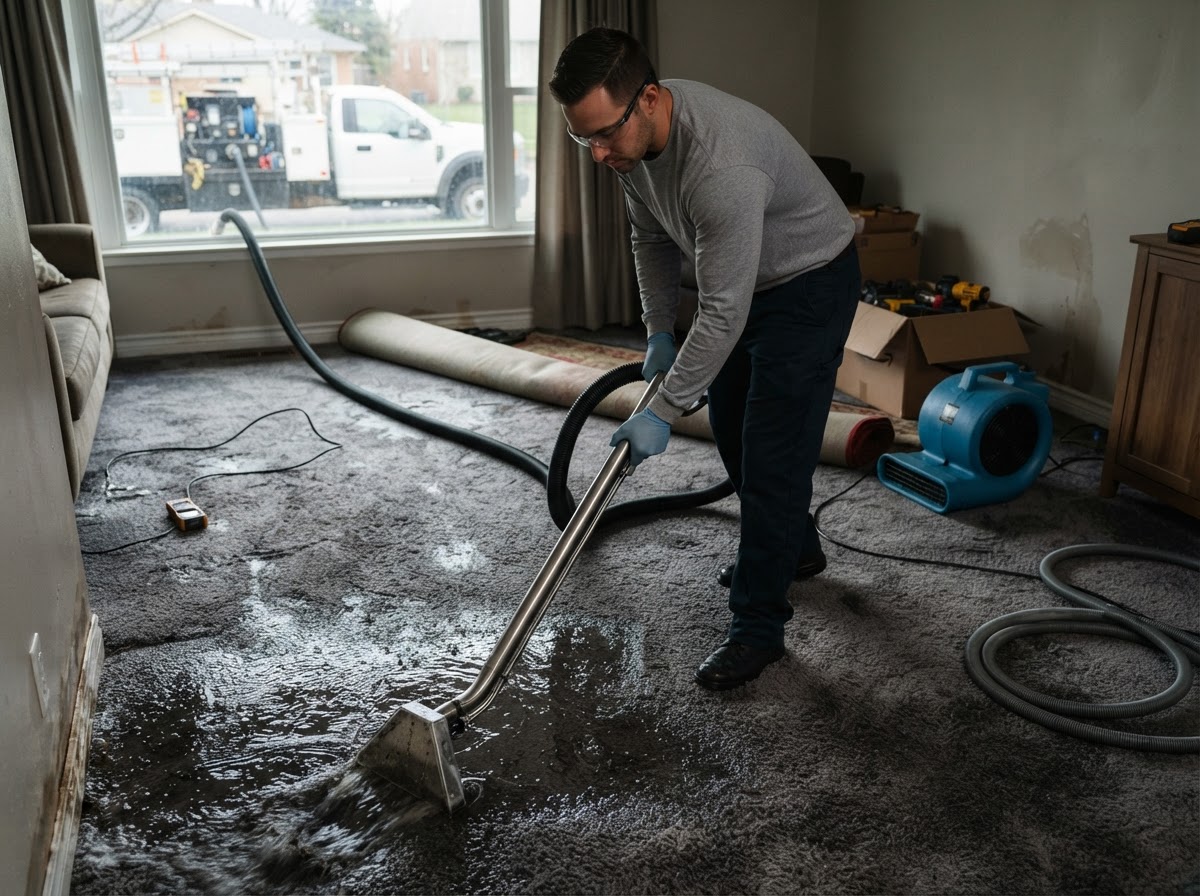
Emergency water removal and water extraction in Leander, TX is the rapid removal of standing water from a property after a pipe burst, appliance failure, overflow, or storm intrusion. Water extraction is usually the first active step in restoration, because removing bulk water quickly limits how far moisture migrates into flooring, drywall, and subflooring. Leander Water Damage Restoration uses commercial extraction equipment to pull standing water from saturated surfaces before structural drying begins. It is important to understand that extraction removes visible water but does not dry saturated materials — structural drying is a separate stage that follows. For homes and businesses in Leander and the surrounding North Austin area, prompt water removal helps reduce the scope of damage. If you have standing water, call 737-379-0924 to discuss emergency extraction.
What Water Extraction Includes in Leander
Water extraction is the physical removal of standing or pooled water using commercial extraction equipment, and it is usually an early step in the restoration process. It is important to distinguish between three related but different stages: water removal, water extraction, and structural drying. Water removal and extraction both refer to pulling standing water from surfaces — using truck-mounted or portable extraction units to remove pooled water from flooring, carpet, and accessible areas. Structural drying is a separate stage that follows extraction, using air movers and dehumidifiers to evaporate and capture bound moisture that has absorbed into drywall, subflooring, and framing. Extraction removes the visible water; drying removes the moisture that has soaked into materials. Extraction is needed whenever standing water is present — after a burst pipe releases pressurized water across flooring, an overflow sends water across a room, a water heater failure discharges a tank of water, an appliance hose leak floods a utility area, storm intrusion brings water indoors, a plumbing failure saturates flooring, or a commercial water loss affects a large floor area. Because porous materials like carpet padding and drywall absorb water quickly, removing standing water fast limits how much moisture these materials take on. Extraction does not, however, mean materials are dry — saturated carpet padding, subflooring, and drywall hold moisture that only structural drying can remove. For that reason, extraction is paired with moisture assessment and drying to address the full extent of the loss.
When Emergency Water Extraction Is Needed in Leander
Several situations call for emergency water extraction in Leander properties. A burst pipe releases pressurized water that can spread across flooring and into adjacent rooms within minutes, requiring rapid extraction to limit the affected area. Overflows — from toilets, tubs, sinks, and washing machines — send water across flooring and sometimes into the ceiling or room below, where standing water must be removed before it migrates further. Water heater failures discharge a tank's worth of water into utility rooms, garages, and adjacent areas, often saturating broad floor areas. Appliance hose leaks, including washing machine supply lines and refrigerator ice-maker lines, release water that pools beneath and around appliances. Storm intrusion during heavy Central Texas rainfall brings water indoors through doors, windows, and roof leaks, creating standing water across floors. Plumbing failures — failed fittings, cracked lines, and supply line breaks — release water that collects in the lowest available areas. Commercial water losses can affect large floor areas and multiple rooms, requiring scaled extraction. In each case, the water category — clean supply water, grey appliance water, or contaminated black water — affects how extraction and subsequent cleanup are handled, as contaminated water requires different protocols. Warning signs that extraction is needed include visible standing water, saturated or squishy carpet, water pooling in low areas, water seeping from beneath baseboards, and the sound of running water. If water is near electrical equipment, outlets, or panels, avoid the area and do not enter standing water until it is confirmed safe.
How Emergency Water Extraction Works in Leander
Extraction follows a focused sequence aimed at removing standing water as quickly as possible. Procedures vary based on the water volume and source, but a typical approach includes:
- 1
Evaluate Water Source & Affected Areas
The water source, category, and affected rooms are assessed. If the source can be safely shut off, it is stopped to prevent additional water. Safety concerns — especially electrical hazards in standing water — are identified before anyone enters the affected area.
- 2
Address Safety Concerns
Standing water near electrical outlets, appliances, or panels is treated with caution. The area is confirmed safe before extraction begins. If sewage or contaminated water is present, additional precautions apply.
- 3
Extract Standing Water
Commercial extraction equipment — truck-mounted or portable units — pulls standing water from flooring, carpet, and accessible areas. Equipment is selected based on the water volume and the affected surfaces.
- 4
Assess Moisture Migration
After visible water is removed, moisture meters and thermal imaging check how far water has migrated beneath flooring, behind baseboards, and into drywall. This reveals moisture that extraction cannot reach.
- 5
Dry & Dehumidify Materials
Air movers and dehumidifiers evaporate and capture bound moisture from saturated materials. Extraction removed the pooled water; drying removes what soaked into the structure. Equipment is monitored and adjusted as materials dry.
- 6
Review Moisture & Cleanup
Final moisture readings confirm materials have reached drying goals. Equipment is removed and the area is cleaned. Removing standing water quickly reduces but does not eliminate the need for drying.
Removing standing water does not mean materials are dry. Carpet padding, subflooring, and drywall hold moisture that only structural drying can remove, so extraction is always paired with moisture assessment and drying to address the full extent of the loss.
Why Professional Water Extraction Matters for Leander Properties
Professional water extraction matters because the speed and thoroughness of standing water removal directly affects how far moisture migrates into building materials. The longer water sits, the more porous materials like carpet padding, drywall, and subflooring absorb — and the more extensive the drying process must be. Commercial extraction equipment removes bulk water far more effectively than consumer wet vacuums, which are not designed for the volume of a pipe burst or appliance failure. Equally important, professional extraction is paired with moisture assessment: after visible water is gone, moisture meters and thermal imaging reveal water that has migrated beneath flooring and behind walls, where it would otherwise remain hidden and continue causing damage. For Leander properties near US-183, the 183A Toll Road, Crystal Falls Parkway, and Ronald Reagan Boulevard, extraction focuses on removing water quickly and then identifying the full affected area for drying. Serving Leander and surrounding Williamson County and North Austin communities, the process addresses both the visible water and the hidden moisture that follows. Depending on the source of your water loss, these related services may also be relevant:
Emergency Water Removal FAQs for Leander, TX
Need Emergency Water Removal in Leander?
If standing water from a burst pipe, overflow, appliance failure, or storm intrusion is affecting your Leander property, call to discuss emergency water extraction, moisture evaluation, and structural drying.