
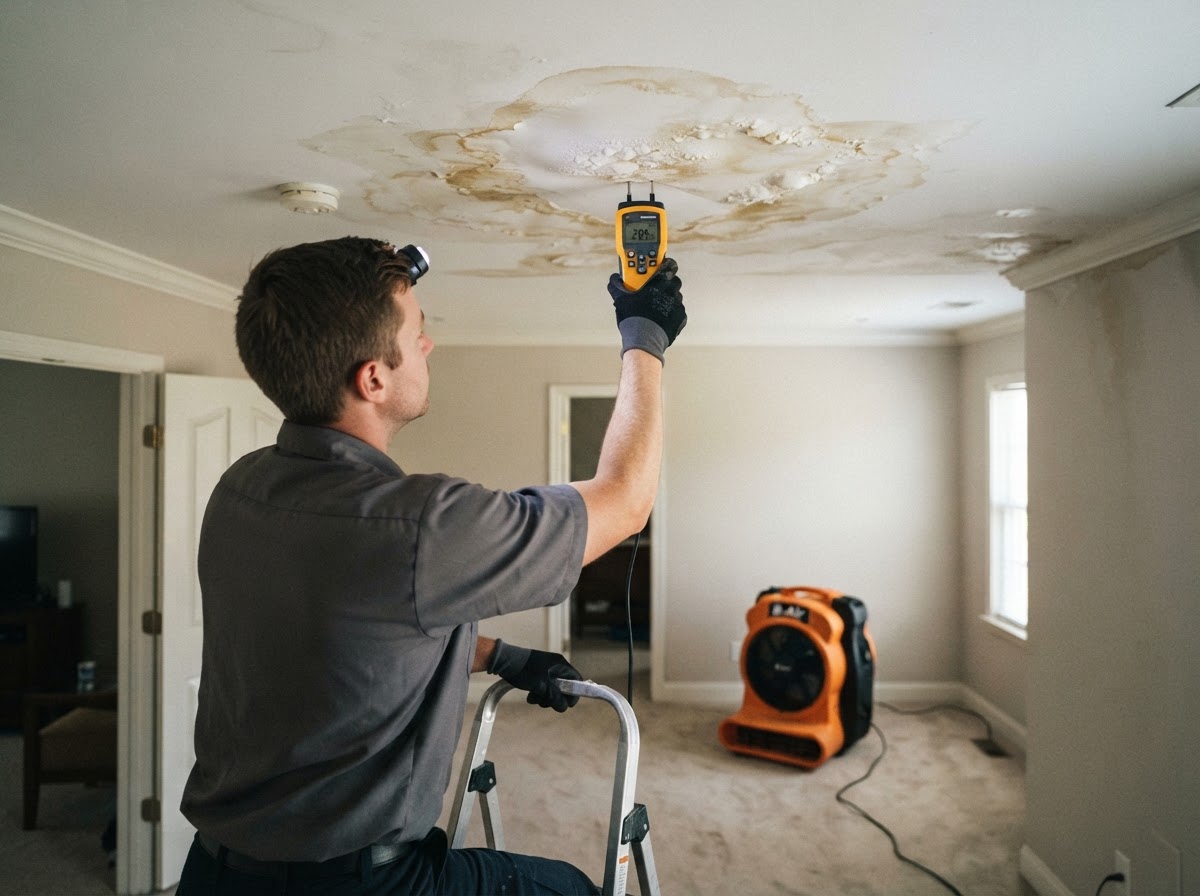
Ceiling Water Damage & Wet Drywall Cleanup in Leander, TX
Ceiling water damage and wet drywall cleanup in Leander, TX addresses the damage that results when water from a roof leak, upstairs plumbing failure, HVAC condensate overflow, or appliance leak reaches ceiling drywall, saturating the gypsum core, the paint, and the framing and insulation above. Ceiling water damage often appears first as a brown or yellow stain, but the moisture behind that stain typically extends farther into the drywall and the cavity above than the visible mark suggests. Leander Water Damage Restoration focuses on evaluating the full extent of ceiling moisture, extracting accessible water, and drying affected drywall and surrounding materials. Because water that reaches a ceiling often travels through the cavity above before becoming visible, moisture detection is central to the process. If ceiling water damage or wet drywall is affecting your Leander property, call 737-379-0924 to discuss cleanup and drying.
Can Wet Ceiling Drywall Be Dried in a Leander Property?
Whether wet ceiling drywall can be dried depends on the moisture saturation level, the water source, and whether the gypsum core has retained its structural integrity. Lightly damp ceiling drywall can often be dried with controlled air movement and dehumidification directed at the affected area. Heavily saturated drywall, drywall that has sagged or softened, or drywall exposed to contaminated water may need to be removed rather than dried. The water source also affects the decision, because ceiling damage from a roof leak, upstairs plumbing failure, HVAC condensate overflow, or appliance line each presents different contamination and material concerns. Ceiling water damage is deceptive because the visible stain rarely represents the full affected area. Water that reaches a ceiling travels through the cavity above, spreading along framing, soaking insulation, and wicking outward through the drywall before the stain becomes visible on the surface below. By the time a stain appears, the moisture may have extended well beyond the visible mark. This is why ceiling water damage and wet drywall cleanup focuses on moisture evaluation as much as on water removal. Professional restoration maps the full extent of ceiling moisture, addresses accessible water, and dries affected drywall and the materials above it. The goal is to address both the visible stain and the concealed moisture that extends beyond it.
Sources and Warning Signs of Ceiling Water Damage in Leander
Ceiling water damage can originate from several sources above the ceiling. Roof leaks allow water to enter through the roof assembly and reach the ceiling drywall below. Plumbing failures in an upper-level bathroom or in pipes running through the ceiling cavity can release water directly into the drywall. HVAC condensate overflow from an attic unit saturates the ceiling below. Appliance lines, such as a washing machine or water heater supply line on an upper floor, can leak into the floor assembly and reach the ceiling of the room below. Each source presents different water category and material concerns. Warning signs that ceiling water damage extends beyond the visible stain include brown or yellow staining that grows over time, bubbling or blistering paint, soft or spongy drywall when pressed, sagging of the ceiling material, active dripping, and peeling finish around the stain's edge. If ceiling materials appear unstable, heavily saturated, or at risk of sagging further, the affected area should be avoided until it can be evaluated, because a saturated ceiling can pose a collapse risk. Affected materials commonly include the ceiling drywall itself, the paint and finish, the framing above, insulation in the ceiling cavity, and sometimes the flooring or wall materials adjacent to the affected ceiling. These signs can indicate concealed moisture and should be investigated with professional detection tools.
Ceiling Moisture Evaluation and Drying Process
After the water source has been addressed or stopped, ceiling water damage cleanup follows a structured sequence focused on evaluating and drying moisture in the drywall and the cavity above. The specific steps vary with the source, saturation, and materials involved.
- 1
Evaluate Ceiling Moisture Extent
The ceiling is assessed to determine how far moisture has spread beyond the visible stain. Moisture meters map the drywall, the framing above, and any insulation in the cavity to establish the full affected area.
- 2
Address Safety Concerns
A saturated or sagging ceiling can pose a collapse risk. If ceiling materials appear unstable or heavily saturated, the affected area is avoided until it can be evaluated and made safe. Water near ceiling fixtures is also assessed for electrical safety.
- 3
Remove Accessible Water
Where standing water is present above the ceiling or dripping has collected water below, accessible water is removed before drying begins. This may include water in the cavity above where access allows.
- 4
Assess Drywall Condition
The ceiling drywall is evaluated to determine whether it can be dried or whether sections are too saturated, soft, or contaminated to retain. This assessment guides whether drying alone is sufficient or whether material removal is necessary.
- 5
Dry Affected Materials
Air movers and dehumidifiers target the ceiling drywall and the cavity above where moisture was detected. Equipment placement focuses on drawing moisture out of the drywall, framing, and insulation where access allows.
- 6
Monitor and Complete Cleanup
Moisture readings are tracked until affected materials reach an appropriate drying goal. Ceiling surfaces are addressed as part of final cleanup once drying confirms that concealed moisture has been reduced.
Drying time depends on the drywall thickness, saturation, the materials in the cavity above, airflow, and humidity, so no fixed timeframe applies. The process continues until moisture readings confirm stabilization.
Why Professional Ceiling Water Cleanup Matters in Leander
Ceiling water damage is particularly deceptive because the visible stain underrepresents the actual affected area, and a saturated ceiling can pose a safety risk if it sags or weakens. Professional moisture evaluation maps how far water has spread through the drywall and into the cavity above, so drying equipment targets the complete affected area rather than only the visible stain. In Leander and the surrounding Williamson County area, properties with upper-level bathrooms, attic HVAC units, and roof assemblies benefit from this thorough approach because moisture left in ceiling cavities continues to affect framing and insulation long after the stain appears. Related restoration services may apply depending on the source. The broader roof leak, ceiling, wall & hidden water damage cleanup service covers the complete range of concealed structural water damage. Structural drying and dehumidification addresses moisture retained in ceiling and framing materials. When the source was an AC condensate overflow, AC drain line overflow water damage cleanup applies. When the source was an upstairs bathroom overflow, sink, bathtub & shower overflow cleanup addresses the fixture source.
Ceiling Water Damage FAQs for Leander, TX
Need Ceiling Water Damage Cleanup in Leander?
If ceiling water damage or wet drywall is affecting your Leander property, call to discuss moisture evaluation, structural drying, and cleanup of affected ceiling drywall and surrounding materials.