
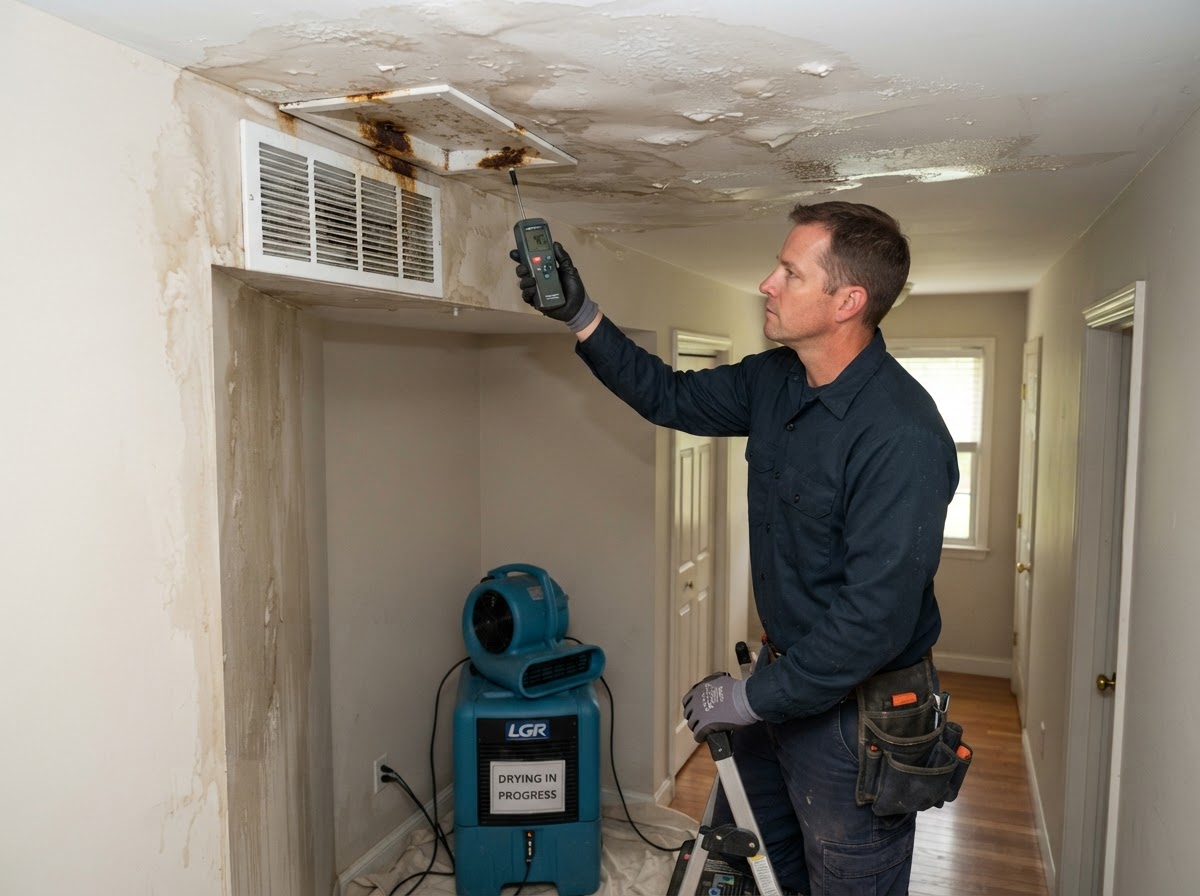
AC/HVAC Condensate Drain Line & Appliance Leak Cleanup in Leander, TX
AC/HVAC condensate drain line and appliance leak cleanup in Leander, TX addresses water damage from clogged condensate lines, overflowing drain pans, and appliance water-line failures. Condensate-related water can affect ceilings, walls, closets, utility spaces, flooring, and attic areas, often as slow, hidden moisture that goes undetected for extended periods. After the HVAC or drain-line source has been corrected, Leander Water Damage Restoration focuses on moisture evaluation, water removal, and structural drying of affected materials. This service does not provide HVAC repair; it addresses the resulting water damage after the source is resolved. For homes and businesses in Leander and the surrounding North Austin area, prompt cleanup helps address hidden moisture before it causes secondary deterioration. If you have water damage from an AC or appliance leak, call 737-379-0924 to discuss cleanup and drying.
What HVAC Condensate & Appliance Leak Cleanup Includes in Leander
HVAC condensate and appliance leak cleanup is the restoration work that addresses water damage from clogged condensate drain lines, overflowing drain pans, and appliance water-line failures. It is important to clarify the scope: this service addresses the resulting water damage — moisture in ceilings, walls, and flooring — rather than providing HVAC repair. After the HVAC or drain-line source has been corrected, restoration focuses on moisture evaluation, water removal where present, and structural drying of affected materials. Condensate-related water can affect several areas. When an AC condensate drain line clogs, the water backs up and overflows the drain pan, running into the ceiling, walls, or closet below the indoor unit. In attic installations, overflow pan water can saturate ceiling drywall and insulation before appearing as a ceiling stain. Condensate moisture in walls and closets often goes undetected for extended periods, allowing hidden deterioration. Appliance water-line failures — refrigerator ice-maker lines, dishwasher supply lines, and similar connections — release water into kitchens, utility spaces, and beneath appliances. Because condensate leaks are often slow and hidden, the visible stain or drip may not represent the full affected area — moisture migrates into ceiling drywall, insulation, wall cavities, and subflooring before discovery. AC drain line overflow water damage cleanup is a common part of this work. Cleanup evaluates which materials have absorbed moisture, removes standing water where present, and dries the structure. Because condensate-related moisture is hidden and slow, moisture detection is central to identifying the true affected area.
Common Sources of Condensate & Appliance Water Damage in Leander
Condensate and appliance water damage in Leander properties comes from several sources. Clogged condensate drainage — where the drain line from the indoor AC coil becomes blocked with debris, algae, or buildup — causes water to back up and overflow the drain pan, running into the ceiling, wall, or closet below. Overflow pan-related water, when the secondary safety pan overflows or the pan itself leaks, sends water into ceiling drywall and insulation in attic installations. Drain line backups at the connection point or where the line exits the building allow water to escape along the line and into surrounding materials. HVAC-related moisture from coil condensation or airflow issues introduces slow, hidden moisture into ceilings and walls over extended periods. Appliance water-line failures — refrigerator ice-maker lines, dishwasher supply lines, water dispenser lines, and similar connections — release water into kitchens, utility spaces, and beneath appliances, sometimes slowly over time. Because condensate and appliance leaks are often slow and hidden, water migrates into ceiling drywall, insulation, wall cavities, and subflooring before the full extent is visible. Warning signs of condensate or appliance water damage include water stains on ceilings near the indoor AC unit, dripping from ceiling registers, damp or stained walls in closets, warped flooring near appliances, damp odors, recurring ceiling stains, and the sound of dripping. This page does not state a specific mechanical diagnosis as fact — the restoration focus is on the resulting water damage after the HVAC or appliance source has been corrected. If water is near electrical equipment, avoid the area.
How Condensate & Appliance Leak Cleanup Works in Leander
After the HVAC or appliance source has been corrected, cleanup follows a structured sequence focused on moisture evaluation and drying. Procedures vary based on the source and extent, but a typical approach includes:
- 1
Evaluate Water Source & Affected Areas
The condensate or appliance leak source and affected areas are assessed. If the source has not been corrected, it should be addressed. Because condensate leaks are often hidden, the full moisture path is mapped. Safety and electrical concerns are identified.
- 2
Address Safety Concerns
Water near electrical outlets, panels, or the HVAC electrical connection is treated with caution. Ceiling materials that appear soft or sagging may indicate structural concern. The area is confirmed safe before work begins.
- 3
Remove Water Where Present
Where standing water is present, commercial extraction equipment removes it from flooring and accessible areas. Condensate leaks often produce hidden moisture rather than large standing water, so extraction is scaled to what is present.
- 4
Assess Moisture Migration
Moisture meters and thermal imaging map how far water has migrated into ceiling drywall, insulation, wall cavities, subflooring, and beneath appliances. This reveals the full affected area beyond the visible stain or drip.
- 5
Dry & Dehumidify Materials
Air movers and dehumidifiers evaporate and capture moisture from ceiling drywall, wall assemblies, insulation, and subflooring. Equipment placement is adjusted based on ongoing readings and the concealed areas involved.
- 6
Review Moisture & Cleanup
Final moisture readings confirm materials have reached drying goals, including inside ceiling and wall cavities. Equipment is removed and the area is cleaned. The timeline depends on saturation, materials, and how long moisture was present.
Because condensate-related moisture is hidden and slow, the visible stain or drip often does not represent the full affected area. Moisture detection maps water in ceiling drywall, insulation, and wall cavities before drying is considered complete.
Why Professional Condensate Leak Cleanup Matters for Leander Properties
Professional HVAC condensate and appliance leak cleanup matters because condensate-related moisture is hidden, slow, and migrates into concealed areas that surface drying cannot reach. Inside ceiling drywall, attic insulation, wall cavities, and beneath appliances, moisture collects over extended periods before discovery, by which point it has often spread well beyond the visible stain. Without thorough moisture detection, hidden condensate moisture goes unaddressed and continues causing deterioration, odors, and microbial growth in ceiling drywall, insulation, and framing. Professional cleanup brings moisture meters, thermal imaging, air movers, and dehumidification together in a process tailored to the concealed materials affected by condensate leaks. For Leander properties near US-183, the 183A Toll Road, Crystal Falls Parkway, and Ronald Reagan Boulevard, cleanup focuses on identifying the full affected area — including inside ceiling and wall cavities — and verifying that materials are actually dry. Serving Leander and surrounding Williamson County and North Austin communities, the process addresses hidden moisture after the HVAC or appliance source is corrected. Depending on the source, these related services may also be relevant:
HVAC Condensate & Appliance Leak Cleanup FAQs for Leander, TX
Need HVAC Condensate Leak Cleanup in Leander?
If water from a clogged AC condensate line, overflowing drain pan, or appliance water-line failure is affecting your Leander property, call to discuss moisture evaluation, water removal, and structural drying after the source is corrected.