
Attic Water Damage & Wet Insulation Drying in Leander, TX
Attic water damage and wet insulation drying in Leander, TX addresses the moisture that reaches attic insulation, ceiling drywall, framing, and decking when a roof leak, storm intrusion, plumbing line, or HVAC condensate problem allows water into the attic space. Water that enters an attic often saturates insulation between ceiling joists, reaches the drywall ceiling below, and travels along framing before any visible stain appears in the living area. Leander Water Damage Restoration does not repair roofs. Once the exterior or mechanical source has been addressed by the appropriate party, restoration focuses on evaluating attic moisture, drying affected insulation and framing, and addressing ceiling materials below. Because attic water often reaches the ceiling drywall and wall cavities below before it is visible, moisture detection is central to the process. If attic water damage or wet insulation is affecting your Leander property, call 737-379-0924 to discuss cleanup and drying.
What Happens When a Roof Leak Wets Attic Insulation?
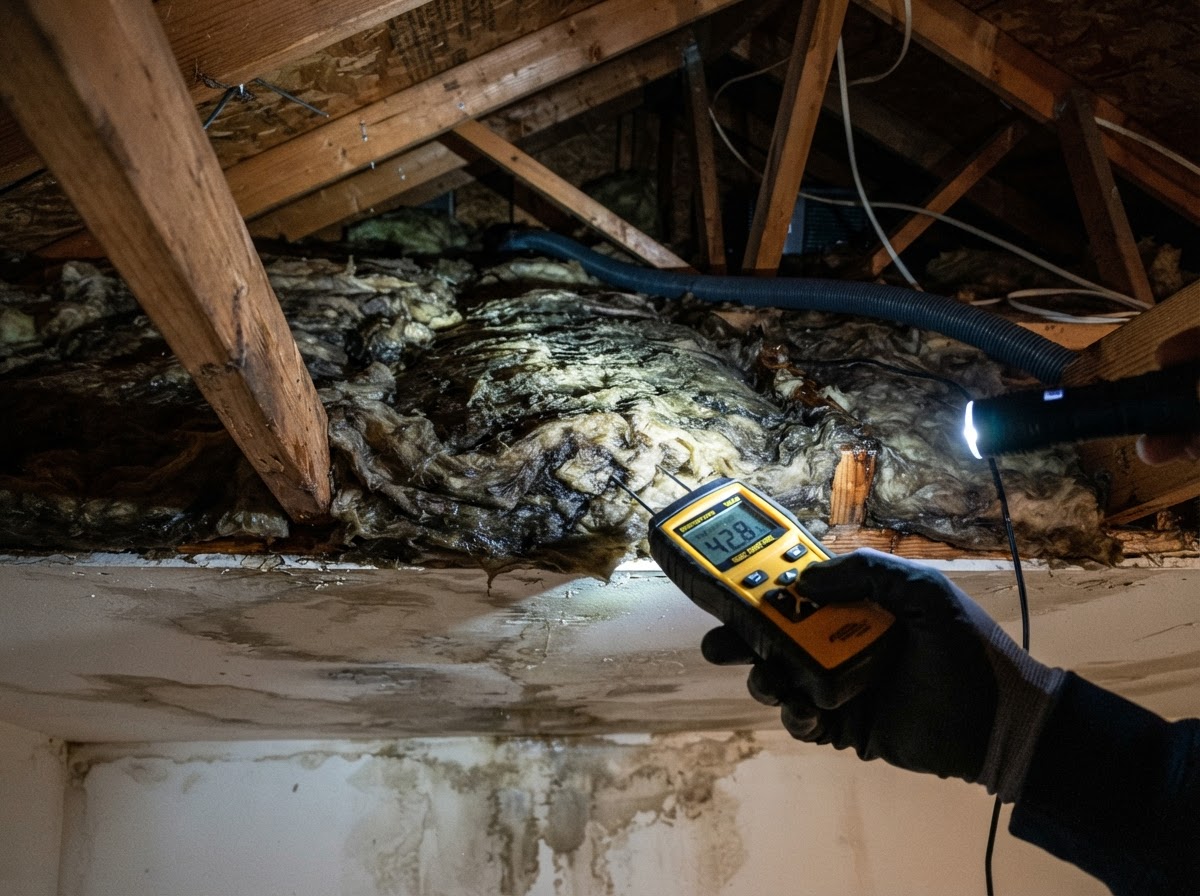
When water enters an attic, whether from a roof leak, storm intrusion, a plumbing line running through the space, or an HVAC condensate problem, it reaches materials that absorb and hold moisture. Attic insulation, whether fiberglass batts, blown-in cellulose, or other material, sits between the ceiling joists directly above the living space, and water that reaches it saturates the insulation and the ceiling drywall below. From there, moisture travels along framing, reaches the back of the ceiling drywall, and can eventually appear as a stain, sag, or drip in the room below. The challenge with attic water damage is that the insulation and framing conceal the extent of the moisture. A small visible stain on the ceiling below can represent substantial saturation in the insulation and framing above, and water that entered at one point in the roof can travel along framing to affect a different area of the ceiling below. This is why attic water damage and wet insulation drying focuses on moisture evaluation as much as on water removal. After the exterior or mechanical source has been addressed, professional restoration evaluates moisture in the insulation, framing, decking, and ceiling drywall, and dries affected materials where drying is appropriate. Not all wet insulation can be dried and retained, and that determination is made during evaluation.
Attic Water Sources and Affected Materials in Leander
Several sources can allow water into an attic space. Roof leaks are a common cause, where damaged or aging roofing allows water to penetrate the roof assembly during rain. Storm intrusion, including wind-driven rain, can push water through openings that would otherwise shed normal rainfall. Plumbing lines that run through an attic can leak at joints or fittings. HVAC condensate problems, including a clogged drain line or overflowing pan from an attic air handler, can release water into the surrounding insulation and ceiling. Each source presents different water category and material concerns. Affected materials commonly include the attic insulation between joists, the ceiling drywall below, wood framing and joists, the roof decking above, and wall cavities where water has traveled downward. Warning signs that attic water has spread beyond the visible area include ceiling stains in the room below, sagging ceiling drywall, damp or compressed insulation, a persistent musty odor in the attic or living space, and moisture readings that climb when a meter is moved along the ceiling or framing. These signs can indicate concealed moisture and should be investigated with professional detection tools. The roof or mechanical source itself should be addressed by the appropriate party before or alongside restoration work. Leander Water Damage Restoration does not repair roofs or HVAC equipment.
Attic Moisture Evaluation and Drying Process
After the roof or mechanical source has been addressed, attic water damage cleanup follows a structured sequence focused on evaluating and drying moisture in the insulation, framing, and ceiling materials. The specific steps vary with the source, materials, and extent of saturation.
- 1
Evaluate Attic Moisture
The attic is assessed to identify where moisture has reached insulation, framing, decking, and the ceiling drywall below. Moisture meters map the full affected area, including where water has traveled along framing away from the entry point.
- 2
Assess Insulation and Materials
Insulation is evaluated to determine whether it can be dried or whether it is too saturated, compressed, or contaminated to retain. Not all wet insulation can be dried and saved, and this assessment guides the drying versus removal decision.
- 3
Address Safety Concerns
An attic with wet insulation and framing is evaluated for structural safety and electrical hazards, including any wiring or fixtures in the space. Unstable areas are avoided until safe.
- 4
Apply Structural Drying
Air movers and dehumidifiers target the attic framing, decking, and ceiling drywall where moisture was detected. Equipment placement focuses on drawing moisture out of the materials where access and the insulation condition allow.
- 5
Dehumidify the Space
Dehumidification continues to pull moisture from the air and affected materials. Because attics can be enclosed and poorly ventilated, controlled dehumidification is central to reducing retained moisture.
- 6
Monitor Moisture and Complete Cleanup
Moisture readings are tracked in the insulation, framing, and ceiling drywall until affected materials reach an appropriate drying goal. Ceiling surfaces below are addressed as part of final cleanup once drying confirms stabilization.
Drying time depends on the insulation type, framing saturation, airflow access, temperature, and humidity, so no fixed timeframe applies. The process continues until moisture readings confirm that affected materials have stabilized.
Why Professional Attic Water Cleanup Matters in Leander
Attic water damage is deceptive because the insulation and framing conceal the extent of the moisture, and a small ceiling stain below can represent substantial saturation above. Professional moisture evaluation reaches the insulation, framing, and decking that a homeowner cannot easily inspect, so drying equipment targets the actual affected area rather than only the visible stain. In Leander and the surrounding Central Texas area, where severe thunderstorms and attic HVAC units are common, properties benefit from a thorough approach because moisture left in attic insulation and framing continues to affect the ceiling below long after the visible stain appears. Related restoration services may apply depending on the source. The broader roof leak, ceiling, wall & hidden water damage cleanup service covers the complete range of concealed structural water damage. Ceiling water damage and wet drywall cleanup addresses the ceiling materials below the attic. Storm and flash flood water damage restoration applies when the source was storm intrusion. Structural drying and dehumidification handles moisture retained in attic framing and insulation. When the source was an HVAC condensate problem, AC drain line overflow water damage cleanup applies.
Attic Water Damage & Wet Insulation FAQs for Leander, TX
Need Attic Water Damage Cleanup in Leander?
If attic water damage or wet insulation is affecting your Leander property, call to discuss moisture evaluation, structural drying, and cleanup of affected attic insulation, framing, and ceiling materials.