
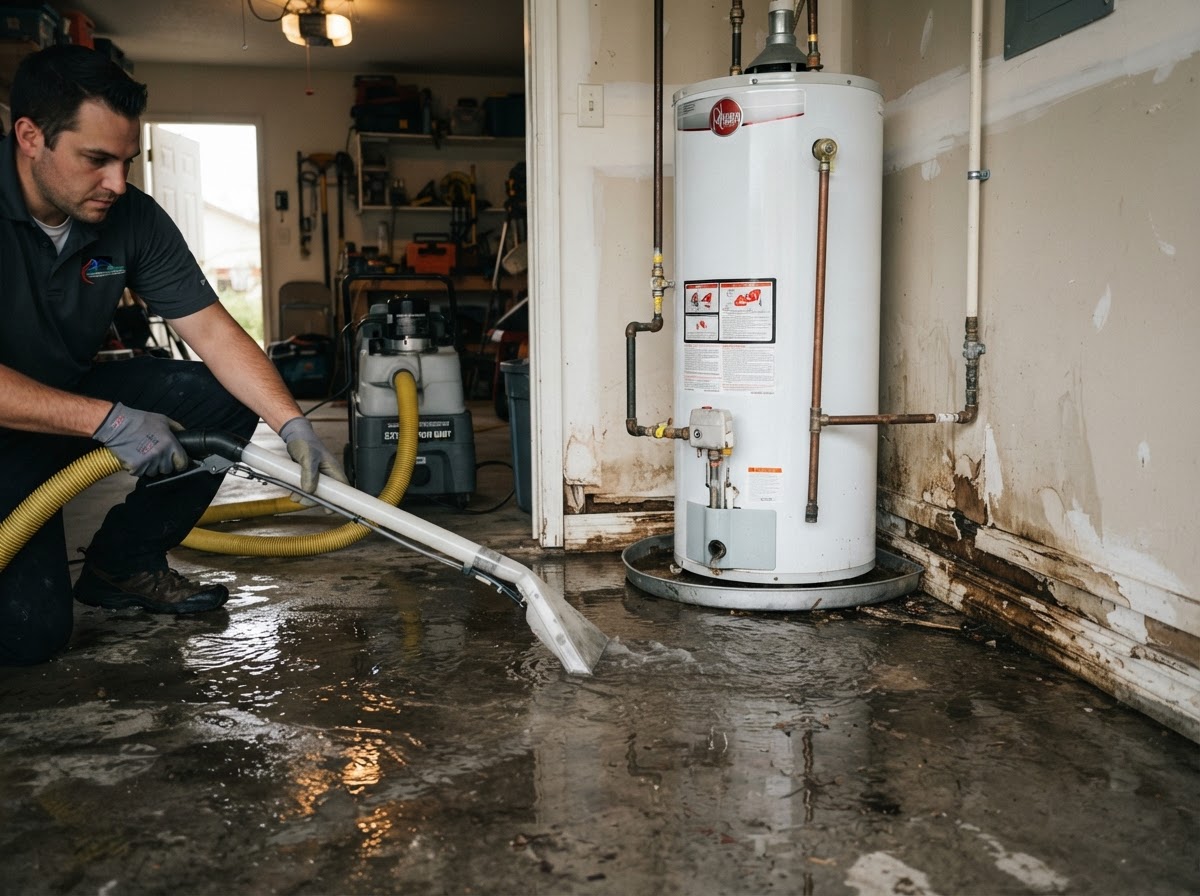
Water Heater Leak Cleanup in Leander, TX
Water heater leak cleanup in Leander, TX addresses the water damage that results when a water heater tank, connection, or supply line fails and releases water into a utility room, garage, closet, or adjacent living area. Water heater failures can release substantial volumes of water quickly, sending it across flooring, into baseboards, and toward surrounding walls. Once the water source has been stopped or the appliance addressed, Leander Water Damage Restoration focuses on standing water extraction, surrounding wall and floor evaluation, and structural drying. The restoration service does not repair or replace water heaters; it addresses the resulting water damage. For homes and businesses in Leander and the surrounding North Austin area, prompt extraction and drying help limit how far moisture migrates beneath flooring and into walls. If you are dealing with water from a water heater leak, call 737-379-0924 to discuss cleanup and drying.
What Water Heater Leak Cleanup Includes in Leander
Water heater leak cleanup is the restoration work that addresses water damage after a water heater has failed or leaked. It is important to clarify the scope: this service addresses the resulting water damage — standing water, saturated flooring, and hidden moisture — rather than repairing or replacing the water heater itself. Once the cold water supply to the heater has been shut off and the appliance has been addressed, restoration focuses on extracting water, evaluating how far moisture has migrated, and drying affected building materials. Water heater failures can release substantial volumes of water into utility rooms, garages, closets, and adjacent rooms. The water travels across flooring, wicks into baseboards and drywall, and migrates beneath flooring into the subfloor and toward surrounding walls. Because water heaters are often located in garages and utility closets adjacent to living areas, the water can spread into hallways, bedrooms, and nearby rooms before the full extent is visible. Cleanup evaluates which materials have absorbed moisture, removes standing water, and dries the structure. Because water from a heater leak can travel beneath flooring and behind baseboards, moisture detection is central to identifying the true affected area. Acting promptly after the source is controlled helps limit how far moisture spreads into surrounding materials.
Common Water Heater Leak Scenarios in Leander
Water heater leaks that cause water damage in Leander properties come from several sources. Tank leaks from corrosion or age can release water slowly over time or fail suddenly, releasing the full tank contents at once. Connection leaks at the inlet or outlet fittings allow water to escape along pipes and into surrounding walls or flooring. Supply line failures — the flexible hoses connecting the heater to plumbing — are a frequent source of sudden water release. Drain valve issues, including loose or failing drain valves, can leak water onto the floor around the unit. Overflow-related water from temperature and pressure relief valves can discharge water onto the floor and nearby drains. Sudden tank failure, where the tank ruptures, releases a large volume of water quickly into the surrounding area. Because water heaters are typically located in garages, utility closets, or attics, the released water often migrates into adjacent living areas, beneath nearby flooring, and into surrounding baseboards and drywall before being discovered. Warning signs of a water heater leak include visible water around the unit, damp or discolored drywall nearby, warped flooring, damp odors, and the sound of running water. This page does not diagnose mechanical faults as certain — the restoration focus is on the resulting water damage after the source is addressed. If water is near electrical equipment, avoid the area.
How Water Heater Leak Cleanup Works in Leander
After the water heater source has been stopped or addressed, cleanup follows a structured sequence focused on water removal and drying. Procedures vary based on the leak location and extent, but a typical approach includes:
- 1
Evaluate Water Source & Affected Areas
The leak location, affected rooms, and moisture paths are assessed. If the cold water supply to the heater has not been shut off, it should be turned off, and the appliance should be addressed. Safety and electrical concerns are identified.
- 2
Address Safety Concerns
Water near electrical outlets, panels, or appliances is treated with caution. The area is confirmed safe before extraction begins. Any gas or electrical supply to the heater should be handled appropriately.
- 3
Extract Standing Water
Commercial extraction equipment removes pooled water from flooring and accessible areas around the heater and in adjacent rooms. Water heater leaks can spread widely, so extraction covers all affected areas.
- 4
Assess Moisture Migration
Moisture meters and thermal imaging check how far water has traveled beneath flooring, behind baseboards, and into surrounding walls. This reveals moisture beyond the visible water around the unit.
- 5
Dry & Dehumidify Materials
Air movers and dehumidifiers evaporate and capture moisture from flooring, subflooring, drywall, and baseboards. Equipment placement is adjusted based on ongoing readings and the materials involved.
- 6
Review Moisture & Cleanup
Final moisture readings confirm materials have reached drying goals. Equipment is removed and the area is cleaned. The timeline depends on saturation, materials, and how far water migrated.
Water from a water heater leak can travel beneath flooring and into surrounding walls far from the unit, so moisture detection is essential to mapping the full affected area before drying is considered complete.
Why Professional Water Heater Leak Cleanup Matters for Leander Properties
Professional water heater leak cleanup matters because the water released by a heater failure migrates into concealed areas that surface drying cannot reach. Beneath flooring, behind baseboards, and into surrounding walls, moisture collects and continues spreading long after the visible water is gone. Without thorough moisture detection and controlled drying, trapped moisture increases the risk of secondary deterioration, odors, and microbial growth in subflooring, drywall, and baseboards. Professional cleanup brings commercial extraction, moisture meters, air movers, and dehumidification together in a coordinated drying strategy tailored to the affected materials. For Leander properties near US-183, the 183A Toll Road, Crystal Falls Parkway, and Ronald Reagan Boulevard, cleanup focuses on removing water quickly and verifying that building materials are actually dry. Serving Leander and surrounding Williamson County and North Austin communities, the process addresses both visible water and hidden moisture after the heater source is controlled. Depending on the leak source, these related services may also be relevant:
Water Heater Leak Cleanup FAQs for Leander, TX
Need Water Heater Leak Cleanup in Leander?
If water from a water heater tank, connection, or supply line failure is affecting your Leander property, call to discuss water extraction, moisture evaluation, and structural drying after the source is controlled.